Sector: Fintech · Nerva S.r.l.s. (co-founder) · Period: 2025 — ongoing
Nerva — open-banking expense tracking mobile app
iOS/Android mobile app of the Nerva platform, a fintech startup I co-founded: open-banking-based expense tracking, delivered as a business edition for SMEs and a consumer edition.
- Co-founder
- Role
- iOS + Android
- Platforms
- PSD2 APIs
- Integration
Context
Tracking expenses is manual work that almost nobody keeps up with. Open banking (the PSD2 directive) automates it at the root: with the user’s consent, transactions flow directly from bank accounts via APIs, with no manual entry.
From this idea came Nerva S.r.l.s., a fintech startup I co-founded and followed through its full journey: product definition, technical architecture and go-to-market strategy. The mobile app is the platform’s first product, developed in two editions: a business edition for SMEs — with invoice reconciliation, dedicated income-and-expense dashboards and integration with the Italian Revenue Agency’s tax portal (cassetto fiscale) — and a consumer edition for personal use, focused on everyday expense tracking.
What it does
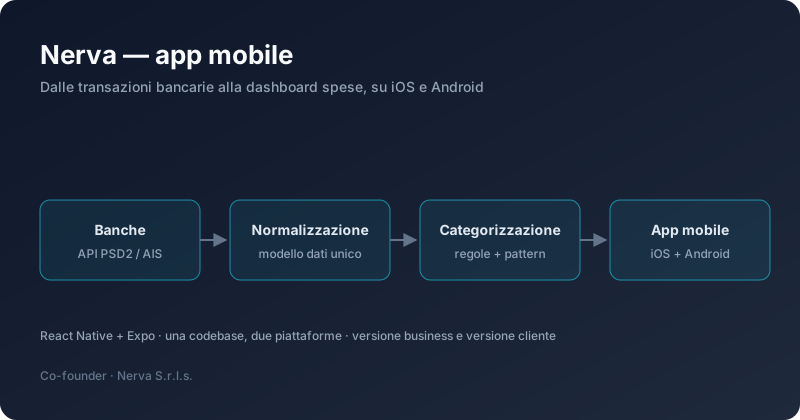
- Connects to bank accounts in read-only mode (AIS model), through PSD2-compliant open banking providers.
- Normalizes transactions coming from different institutions into a single data model: every bank exposes different formats, fields and conventions.
- Categorizes expenses automatically with rules and recurring-pattern recognition (fees, subscriptions, recurring vendors).
- Presents reports, budgets and cashflow trends in a mobile dashboard, on the same data foundation shared with the web version.
Technical challenges
One codebase, two platforms. The app is built with React Native and Expo: a single codebase for iOS and Android, with test builds distributed to pilot users on both ecosystems throughout the MVP phase.
Normalizing banking data. Institutions describe the same operation in different ways, with unstructured references. The categorization engine has to handle noisy descriptions and be conservative enough not to mislabel: one wrong category undermines trust in the whole product.
Compliance by design. Working with banking data means designing for GDPR and PSD2 requirements from day one: explicit consent, minimization of stored data, read-only access.
Stack
React Native · Expo · Firebase (auth, database, cloud functions) · PSD2 open banking provider · e-invoicing integration (SDI)